USA
USA United Kingdom

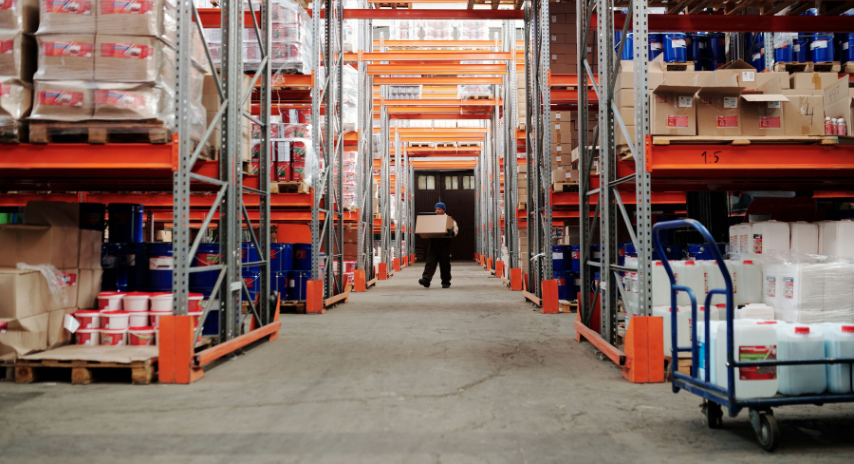
From high‑volume picking to handling heavy and awkward loads, common warehousing tasks place significant strain on the musculoskeletal system of workers. It’s therefore no surprise that warehouse injuries remain stubbornly high, and that manual handling injury claims continue to drain budgets and disrupt operations.
Even with training, supervision, and traditional ergonomic assessments, injuries persist.
In this guide, we explore why that’s the case and how motion capture technology is capable of disrupting the injury cycle in warehouse work.
Why traditional ergonomic assessments fall short in warehousing
Most warehouses still rely on manual observation. A supervisor or ergonomist watches a worker perform a task while making notes on posture and repetition. But this approach breaks down in a warehouse for three reasons.
1. The work is too fast and too variable
A picker may perform the same task 500 times, but never in exactly the same way. Load weight changes, shelf height changes, and the worker’s fatigue level changes. A single observation can’t capture this variability.
2. Risk accumulates over time
A slightly awkward lift isn’t dangerous on its own. But repeat it 800 times in a shift and it becomes a major contributor to MSDs. Manual assessments can’t track cumulative strain.
3. Supervisors are stretched thin
Warehouse supervisors juggle labor allocation, equipment issues, productivity targets, safety checks, and constant operational firefighting. They often simply don’t have the bandwidth to conduct detailed ergonomic assessments across a large warehouse workforce. And even if they did, they can’t measure joint angles or detect subtle movement patterns accurately with the naked eye.
How motion capture improves warehouse injury prevention
AI motion capture is essential for musculoskeletal health and proper ergonomics in industrial work environments. Here are the practical reasons motion capture risk assessment is so effective in reducing injuries in warehouse environments.
Captures the true biomechanics of warehouse tasks
Instead of relying on estimation, motion capture measures:
- Spine flexion during lifting
- Shoulder elevation during high‑shelf picking
- Wrist deviation during scanning
- Knee loading during repetitive squatting
- Trunk rotation during pallet building
- Push/pull forces during cart or pallet jack movement
And it doesn’t miss one thing for another. It can track all stress points across the body simultaneously, accurately measuring joint angles and strain.
These are the movements that drive warehouse manual handling injuries, and the risk can easily fly under the radar until it’s too late. But with motion capture ergonomic assessments, all motion risks are made visible ahead of time.
Reveals risk patterns supervisors can’t see
A worker may start a shift lifting safely, but as fatigue sets in, their posture deteriorates. This is a problem for traditional assessments because they only capture risk at a moment in time. If the scenario changes, hazards evolve and control measures go out the window.
Conversely, with motion capture technology, risk assessment can be ongoing, tracking exposure over the course of multiple tasks or even entire shifts.
It provides a more comprehensive understanding of the risks individual workers face and offers predictive insights, enabling highly tailored and timely interventions.
Related – Reactive vs proactive ergonomics
Provides defensible data for reducing injury claims
As motion capture data is so rich, and the data capture process is so efficient, supervisors and safety managers have the time and understanding required to deliver truly impactful solutions.
These data-driven interventions are naturally more effective at lowering injury rates, which, in turn, brings down the number of injury claims a warehouse workforce is liable to make.
However, even if a warehouse does face manual handling injury claims, motion capture risk assessments provide substantial evidence that you assessed and subsequently controlled the risk.
It gives you timestamped, scientifically grounded data that can strengthen your position, potentially reduce claim costs, and support compliance with legislation such as New York’s Warehouse Worker Injury Reduction Act.
Reduce warehouse injuries with Healthy Working RiskAI
Healthy Working RiskAI is our AI-powered motion capture and risk analytics app built for reducing injuries in environments exactly like warehouses. Here’s how it can help:
Real‑time motion capture that fits warehouse pace: Workers can be assessed in seconds using a simple app. No suits, no sensors, no disruption.
A dashboard that turns movement into actionable insight: Real-time risk insights and data aggregation across shifts, teams, and sites, helping safety managers identify high‑risk tasks, prioritise interventions, track improvements over time, and justify equipment or layout changes.
Expert support when you need deeper analysis: If a task is complex (e.g. mixed loads, tight spaces, unusual equipment), your team can submit a short video for a full ergonomist review. This blends AI speed with expert human consultation for the best possible outcomes.
Try Healthy Working RiskAI for free
At Cardinus, we’re currently offering a free one‑month trial of Healthy Working RiskAI for your entire workforce, giving warehouse teams the chance to see the impact of AI‑powered motion capture for themselves.
Request your Healthy Working RiskAI free trial – and close the warehousing ergonomics gap for good.
Motion capture: The missing piece in warehouse safety
Warehouses are too fast, too variable, and too physically demanding for traditional ergonomic methods to keep up. Motion capture provides the continuous, objective, real‑world insight needed to finally get ahead of MSDs.
It helps organizations reduce warehouse injuries, cut manual handling injury claims, improve compliance, lower compensation costs, and boost productivity. And Healthy Working RiskAI makes this technology accessible, scalable, and incredibly fast to deploy.
If you have any questions about Healthy Working Risk AI, we’re happy to help. Just contact the team, and we’ll tell you what you need to know.